
Meet Dr. Stockton!
Why did you decide to become a chiropractor?
In high school during the summers, I worked for a friend’s family landscaping business. I spent a lot of time planting trees, digging trenches, and installing sprinkler systems and I started having some back pain.
My mom suggested that I go see a chiropractor. At the time, I didn’t feel like much was happening but after about three treatments I had no more low back pain. I was able to work for longer without any pain and I was impressed with that.
I ended up seeing another chiropractor for an injury I had in baseball and again, I was really surprised with the effects of spinal manipulation on the body and how your body moves.
After starting college, I was in the biology program at Washington State University. I initially thought I wanted to pursue physical therapy but I quickly realized that I was a lot more interested in the hands-on approach of chiropractic care.
I found out that there was chiropractic school in Portland, and I applied and got in!
Is there anything that surprised you about chiropractic care after earning your degree in chiropractic?
The immediate relief was surprising to me. The ability to have someone walk into your office—who can’t stand up straight or sit in one position and they are miserable—and then with just feeling the body, you’re able to tell where they are injured and after one adjustment there is that immediate relief. It’s almost like an ah-ha moment where they are able to stand or do things immediately that they previously weren’t able to do 15 minutes ago. It’s very satisfying to be able to help people in that way.
What do you enjoy most about your work each day?
Being able to interact with each patient and being able to see each patient as their own “puzzle.” Everyone is different and while they might have the same chief complaint, the cause and treatment vary.
I have an evidence-based approach so I’m never going to tell a patient I can fix something unless I truly believe I can. I’m not going to have a patient come see me three times a week for the rest of their lives. Once you’ve reached your pre-injury status I’m going to let you free! I’m not going to make a patient come in if I don’t think it’s necessary.
What do you think people would be surprised to learn about the benefits of chiropractic care?
We can help with all areas of the body—not just your neck or back. We can adjust the foot, the ankle, the knee—every joint in the body we know an adjustment for.
What do you enjoy doing outside of work?
I graduated from WSU, so I love to watch the Cougs play. I love sports—I love watching and playing sports whenever I’m able. I also have a jet ski and that is where you can find me every weekend of the summer—out on the lake or river with my fiancé (we are getting married in July 2018 in the Dominican Republic).
I love being outdoors year-round—elk hunting with a bow, taking my truck up into the mountains and the snow, I just love being active outside.
Dr. Stockton is now accepting new patients. Schedule an appointment here.
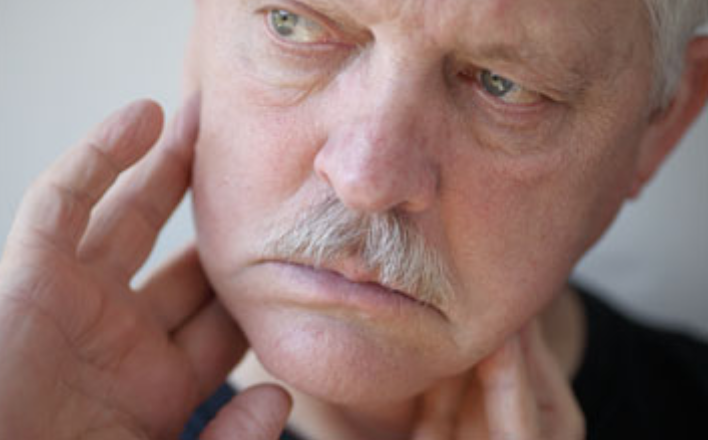
Dentists & Chiropractors Help TMJ Patients
By: Charles Blum, D.C.
While all doctors ultimately want what is best for their patients, sometimes the concept of collaboration isn’t always considered. Historically, chiropractors and dentists would both help treat jaw or TMJ related pain or disorders on an individual basis helping patients as best they can. However, new research has been showing some fascinating relationships between how the body functions from a postural standpoint and how the jaw can respond.
To understand how a relationship between body posture and jaw function could occur, we need to look to some ingrained features of the human nervous system. We have two ways of keeping our heads on straight, one is associated with our eyes and other with the semicircular canals within our ears. They are called the visual and vestibular righting mechanisms. Together, they keep our eyes and ears level to the horizon regardless of any postural imbalance related to our legs, pelvis or spine.
Another important factor that helps us understand the posture and jaw interrelationship is that the body functions as a unit. The jaw or mandible sits in muscles that come off the head and neck. As the head and neck change position due to posture, the jaw muscles are likewise affected. What is fascinating is that a change in posture can affect jaw function, the way the teeth touch, the way the jaw joint is positioned and our ability to breathe.
A 2007 Tufts University study with 45 asymptomatic subjects found that if a dental splint appliance is placed in the mouth preventing the teeth from being in the proper position that this affects the patient’s ability to maintain proper body balance. Then, with the same patients they also found that if they placed a heel lift under one foot, the subject’s teeth would first contact when biting down on the side of the heel lift. This study illustrates how a change in the way teeth contact and the jaw position can affect posture and how body posture can affect teeth contact and jaw position.
What this has developed is a desire in the chiropractor’s part, when working with a patient with a jaw/TMJ problem, to make sure the patient’s posture is in balance in order to facilitate the dentist’s work to balance jaw function. Looking at it from a different angle, after appropriate dental work is performed on a patient, sometimes this change in teeth and jaw position changes a patient’s posture and a chiropractor can help the patient’s body accommodate to these new changes.
Since these concepts are relatively new, it can be challenging to find a dentist or chiropractor willing to co-treat a patient with jaw pain disorders. Not every patient needs this integrative care, but a patient who has concurrent neck or back pain, or is aware of a relationship between jaw and body pain should attempt to see if they are a candidate for this “team” care.
Here is a simple guide to determine how a person may assess their need for TMJ care:
How do you know when you have a TMJ condition that may warrant dental care?
- Does your partner say you are grinding your teeth at night or constantly snore?
- Do you have tooth temperature sensitivity, pain on chewing, or are you wearing your teeth down?
- Did you notice a relationship between orthodontic or dental work and your jaw pain?
These all may warrant a dental evaluation by a dentist trained in TMJ.
How do you know when you have a TMJ condition that may warrant chiropractic care?
- Do you have jaw joint pain, tension, and popping on opening or closing?
- Did your jaw pain start after having some lower back or neck pain?
- Did your neck or low back pain start after having jaw pain?
These all may warrant a chiropractic evaluation by one trained in TMJ care.
How do you know when you have a TMJ condition that may warrant both dental and chiropractic?
- When chiropractic care helps but the condition keeps returning, this commonly necessitates a referral to a dentist.
- When dental care helps but the condition keeps returning, this commonly necessitates a referral to a chiropractor.
- Ideally, before any dental work is finalized and becomes permanent, chiropractic care to balance posture is advised.
The future of healthcare will involve developing a relationship between the different doctors who treat similar conditions with the goal of offering our patients the best possible care. This would involve the least amount of intervention with the best outcomes. It is also important patients become knowledgeable about their condition. They need to be involved in searching for the most updated options for their care.
Dr. Charles Blum is a chiropractor located in Santa Monica, CA. He’s treated TMJ disorders for 30 years. He’s a senior clinical instructor in the Cranial Facial/TMJ Clinic at the White Memorial Center in Los Angeles.