The magic of MAGNESIUM
Magnesium is something I’ve been researching a lot lately, much thanks to the seemingly chronic issues that plague so many individuals regarding sleep issues and low energy levels. When recommending natural alternatives to improve sleep and potential causes for fatigue, magnesium is definitely a topic worth talking about!
This mineral is responsible for over 300 critical processes in our body including some big ones such as:
- Glucose control
- Bone strength & development
- Muscle function
- Blood Pressure regulation
- Energy production
- Nerve function
The alarming news is that recent studies have shown that approximately 80% of American’s are deficient in magnesium. These deficiencies can be caused by a number of factors, but a few well-known factors include soil quality and gut quality. The fact that our crops are not rotated and the soil is not as nutrient-rich as it used to be, means that the magnesium content in our respective plant-based foods is lower than ever before.

In addition, poor gut health is another contributor to magnesium deficiencies. Absorption issues in the GI tract, a common problem exacerbated by a toxic diet, medication use, excess sugar or alcohol intake (just to name a few) can all contribute to issues absorbing magnesium from our foods.
Deficiencies can be difficult to diagnose because a blood test won’t typically indicate a problem (since about 99% of magnesium is
stored in our bones, not blood). Here’s some things to watch out for that could be a sign of a magnesium deficiency.
- Muscle cramps
- Constant fatigue
- Muscle twitching and soreness (restless leg syndrome)
- Difficulty concentrating & remembering things
- Headaches or migraines
- Insomnia
- Osteoporosis
- Anxiety
The good news is that we can easily get magnesium orally (thru diet and supplementation) or topically (absorbed through the skin). Here are some easy ways to increase your magnesium intake:
*Epsom Salt Soaks (which are typically a compound of Magnesium Sulfate)
- Soak in tub of warm (90 degrees) water, not hot
- Pour 2 cups into warm water
- Add essential oils to tailor the benefit of the soak
- Soak 12 minutes for maximum benefit
These soaks are great for:
- Muscle aches
- Joint pain
- Decreasing stress level
- Eliminating toxins
- Injuries/ stiffness
- Constipation
In addition to the soaks, there are plenty of delicious reasons to incorporate more MAGNESIUM RICH FOODS into your diet. Here are some excellent sources to focus on!
Men RDA 400-420 mg & Women RDA 310-320 mg a day
Spinach 1 c: 157 mg (40% DV)
Chard 1 c: 154 mg (38% DV)
Pumpkin seeds 1/8 c: 92 mg (23% DV)
Yogurt or Kefir 1 c: 50 mg (13% DV)
Almonds 1 oz: 80 mg (20% DV)
Black Beans ½ c: 60 mg (15% DV)
Avocado 1 medium: 58 mg (15% DV)
Figs ½ c: 50 mg (13% DV)
Dark Chocolate 1 square: 95 mg (24% DV)
Banana 1 medium: 32 mg (8% DV)
Other nutritious foods that are also high in magnesium include: salmon, coriander, cashews, goat cheese and artichokes.
The tolerable upper intake level (UL) for supplemental magnesium is 350 mg/day. Excessive intake of supplemental magnesium can result in adverse effects, especially in individuals with impaired kidney functions. So be sure to get expert advice on the amount of magnesium supplementation you need!
Chiropractic for Pets?
Absolutely!
Much like Chiropractic care for humans, your pets can benefit from Chiropractic adjustments to keep them healthy and well throughout their life. Pet owners often report seeing increased energy, reduced pain or wagging tails after just a few treatments.
Whether your pet is athletic or geriatric, chiropractic care may help to reduce pain and promote optimal function of the musculoskeletal system.
All vertebrates are good candidates; however, dogs, cats, horses, and rabbits are the most common. It is important to have your pet examined by a certified Animal Chiropractor regularly, even when there is nothing obviously wrong.
A certified Animal Chiropractor is a Chiropractor or a Veterinarian who has over 200 additional hours of instruction in the safe and effective treatment of animals using specific Chiropractic techniques.
If your pet is showing signs of problems, then Animal Chiropractic may be needed now!
You know your animal better than anyone. A change in behavior or mood is often a symptom that your pet is in pain, and might be caused by a joint that is not moving properly. Sometimes they may experience changes in appetite.
Chiropractic benefits pets with both acute injuries and chronic conditions.
- Your pet has difficulty rising from a lying down position or from sitting to standing.

- Your pet has muscle stiffness or weakness.
- Shaking /tremors in the limbs or the body.
- Mobility and gait abnormalities or limping.
- Different posture, i.e. hunched back, sitting on one hip rather than squarely.
- Your pet has been injured or there is a decreased performance in athletic ability.
- Bowel or bladder control problems.
- Changes in behavior, mood, or appetite.
What conditions respond well to Animal Chiropractic care?
- Osteoarthritis (Arthritis)
- Pain associated with hip dysplasia
- Intervertebral disc disease (slipped disc)
- Idiopathic Lameness
- Weakness in a leg
- Urinary Incontinence
- Sports injuries
- Other neurological conditions
Pet owners report the following benefits and changes in their animals after they have received Animal Chiropractic care:
- Less pain medications required (or none at all)
- Pet is more comfortable and happy!
- Improved mobility
- Improved gait
- Improved bladder control
- Increased energy and improved health
- Better temperament and mood
- Improved athletic performance
- Pet is more playful
Dr. Amanda Kremer is an AVCA Certified Animal Chiropractor. She provides chiropractic services to pets at East Padden Animal Hospital and helps people at Cooper Chiropractic. For more information, please visit Dr. Kremer’s website: www.Chiro4Critters.com.
How Chiropractic Can Relieve Your Sinus Problems
With cold and flu season still upon us and allergy season just starting, many people are suffering from sinus pain and congestion that can also result in ear pain, achy teeth and drainage at the back of your throat. Did you know there is a non-invasive, drug-free approach to relieving your sinuses that is also very effective? Well there is and it’s from your chiropractor! Through a combination of specific facial massage, CranioSacral Therapy, myofascial release, and SacroOccipital Technique (SOT) sinus pain and pressure can be decreased in as little as one treatment.
So where exactly are your sinuses and how many do you have? There are 4 pairs of sinuses: frontal (in your forehead above your eyes), sphenoid (deep in your skull and between your eyes), ethmoid (above and in front of the sphenoid sinuses), and maxillary (under your eyes in your cheeks).
Now that you know where they are we need to discuss what they do. These air filled cavities in our skulls are lined with a thin layer of tissue that produces mucous. This mucous layer protects our nose from any invading pollutants, micro-organisms, dust, and dirt. It is also considered to humidify the air we breathe and keep our nose from drying out. Bonus effects of our sinuses are making our skulls lighter and helping our voice resonate. That’s why we sound different when our sinuses are full of mucous.
The sinuses are normally empty except for the thin layer of mucous lining them but can fill when the tissue layer becomes inflamed. Our sinuses can become inflamed by invasion of bacteria or viruses and irritation from allergens like pollen or dust. This irritation will cause an overproduction of the mucous in an effort to expel whatever is invading them. This filling of mucous is what causes the pain and pressure in our faces because the surrounding bone can’t expand to accommodate.
So how does CranioSacral Therapy, SOT and all these other techniques help relieve your sinuses? They all gently help release the tension of the underlying skin, tissue layers, and any bony restrictions. Once these are released they will unlock the mucous plug that leads from your sinuses into your nose allowing everything to drain and relieve the pressure or congestion.
Most patients experience relief with just one treatment. Frequency of treatment is unique for each patient and should be discussed with your chiropractor.
Drs. Karis and Cassi have undergone specific advanced training in CranioSacral Therapy, SOT, and treatment of sinuses. If you have any questions or would like to schedule an appointment, please call the office at 360-693-3030.
Vitamix Blender Recipes- Oh the Possibilities!
How many of you have a Vitamix blender or another variation of a high speed blender? Are you stuck in a smoothie rut? I suggest you break free of this rut and try one of the countless possibilities for quick, easy and wholesome meals, snacks and treats that are possible with a good blender!
There are many more uses than just smoothies for a good blender…And the best part is the simplicity of these Vitamix blender recipes!
-Soups -Marinades -Desserts -Nut Butters
-Sauces -Spice rubs -Dressings -Snack items
Here are a few of my favorite fresh yet simple recipes to make your dinner fresh and delicious!
Mixed Greens & Butter Beans with Carrot Ginger Dressing
prep time: 7 minutes
serves: 4
gluten-free, dairy-free, soy-free, vegan, vegetarian
INGREDIENTS
4 cups mixed greens
2 cups butter beans (or beans of your choice)
1 avocado diced
¼ cup dry roasted pumpkin seeds
½ sweet onion diced – yellow or white (optional)
juice of ¼ lemon
2 large carrots, peeled and chopped
1-inch fresh ginger, peeled and chopped
2 tbsp. EVOO
2 tbsp. balsamic vinegar or apple cider vinegar
finely diced shallots and/or garlic (optional)
INSTRUCTIONS
- First make the dressing by combining all the ingredients in a food processor, Vita-Mix, or high-speed blender
- Chop all salad ingredients.
- Squeeze lemon over salad and mix well add (a little!) salt if needed.
- Toss with ½ dressing before serving.
Curry Coconut Pumpkin Soup
prep time: 10 minutes
serves: 4
gluten-free, dairy-free, soy-free, vegan, vegetarian, paleo-friendly
INGREDIENTS
1 can of full-fat organic coconut milk
1 can organic pumpkin puree’
1 thin carrot, cut into chunks
1 small garlic clove
1 ½ tsp. galangal ginger (1 tsp. fresh ginger works well too)
2 tsp. curry powder
½ Thai chili pepper, minced (these can be quite spicy, so start with less if you don’t want it spicy!) OR ¼ tsp red pepper flakes
1 medjool date
Toppings:
2 small zucchinis, cut into noodles
1 red bell pepper, cut into matchsticks
1 handful cilantro
½ tbsp. lemon juice (optional)
**Grilled shrimp will take this dish to a whole new level!! Or ground turkey seasoned with ground ginger, cayenne pepper and chili powder! These added protein kicks that will satisfy a large appetite and has the the perfect balance of proteins, carbs and healthy fats!
INSTRUCTIONS
- Combine all ingredients except toppings in Vita-Mix, food processor or high-speed blender.
- Blend until smooth and creamy.
- Remove from blender and warm over medium-high heat.
- Serve with red bell peppers, zucchini noodles and top with cilantro and green onion.
prep time: 7 minutes
serves: 4
gluten-free, dairy-free, soy-free, vegan, vegetarian, paleo-friendly
INGREDIENTS
2 ripe avocados
2 ripe bananas
½ cup unsweetened cocoa powder
½ cup coconut milk
½ tsp. pure vanilla extract
pinch of cinnamon (optional)
pinch of salt (optional)
1-2 tbsp maple syrup
1 tbsp cacao nibs or 100% dark chocolate for garnish
1 tbsp. toasted hazelnuts
1 tbsp. unsweetened coconut
INSTRUCTIONS
- Scoop out the flesh of the avocados into a food processor, Vita-Mix or other high-speed blender and add all other ingredients except garnish.
- Blend until creamy and smooth.
- Serve in individual size bowls and top with desired garnish.
OK, I’m hungry now and off to experiment some more with my beloved Vitamix! I encourage you all to step out of any comfort zone you may be in with your cooking and embrace the possibilities that are available to you with whole foods in order to improve the quality of your and your family’s intake!
Benefits of Child Chiropractic Care
How important is your nervous system to your entire well-being? Well, the first cells to develop in utero are the cells that become the brain and nervous system. Their continued growth and development are the most important and most impacted in the first two years of a child’s life. So getting your child checked by a chiropractor early to make sure that their nervous system is developing and functioning properly is always a good idea.
The birthing process alone is a really traumatic experience for both the mother and child. A natural birth and a cesarean birth each present their own set of traumas placed on the newborn. Imagine being in a restrictive, pressurized compartment for about 40 weeks, then pushed and pulled out by your head. With as fragile as a newborn’s nervous system is, it only takes a minor amount of trauma to have a substantial impact. About 95%1 of infant spinal misalignments are due to traction at birth. The signs and symptoms don’t have to be noticeable immediately but can have an amplified effect as they continue to grow and develop. By the time they are 5 or 6 years old they suffer from headaches and postural problems or diffuse symptoms like sleep disorders and being unable to concentrate.2 All the while, these symptoms are rarely traced back to birth trauma and they could have been prevented if detected within the first few months of life.
Aside from an initial evaluation after birth, there are other times when it is important to have your child checked by a chiropractor: any trauma or falls, sports injuries, difficulties with latching, colic, sleeping or digestive issues, asthma, allergies, ear infections, and bed wetting, just to name a few. These are all symptomatic complaints that are typically not addressed until the child experiences them.
There are also benefits to having your child see a chiropractor on a periodic basis even when they have no current complaints. For a child under the age of one, it is always a good idea to have them checked at major milestones like when they start to hold their head up, sit up, crawl and start walking. At these stages in their life the major curves in their spine are developing and with each transition it is important to make sure that there is no interference in their nervous system. Your child will also benefit with a strengthened immune system. Studies show that children who receive regular chiropractic care experience less colds and flus, greater emotional wellbeing, improved ability to concentrate, and are more adaptive to physical and emotional stressors. How could you not want your child to have all of these benefits from a simple visit to the chiropractor?
Here is a breakdown of how often your child should see a chiropractor for a Well-Child visit:
- First month of life!
- Every three months for the first year
- Every 6-12 months for every year after that
Other times to bring them in other than for Well-Child visits:
- The major milestones (mentioned above)
- Any traumas or falls
- Any signs of imbalances (limping, head tilting, favoring one side for anything, etc.)
- Any of the above mentioned symptoms (i.e. bed wetting, colic)
Dr. Karis and Dr. Cassi have undergone specific advanced training in pediatrics, child chiropractic care and family wellness. If you have any questions or would like to schedule an appointment, please call the office at 360-693-3030.
1Symposium on operative obstetrics, Donn, MD: Vol. 10, No. 2, June 1983
1Martin F. Rosen DC, CSCP, CSPP at ICPA SOT CranioSacral seminar
2Journal of Manual Medicine, Springer, Velag 1992
The Effects of Sleep Deprivation on Appetite Regulation and Weight
Ironically, while writing this blog post, I have endured one of the most sleep deprived decades of my life! I can say from my firsthand experience as a working mom of three young ones, that a few nights of missed sleep don’t do anything positive for our bodies. Lack of sleep will cause the obvious symptoms of fatigue, moodiness, memory issues (loss) and often times, mindless eating.
When it comes to missing out on adequate zzz’s, it is not shocking to learn that there are more harmful effects on our health than the obvious ones mentioned above! Over the past three decades, the rates of both obesity and sleep deprivation (defined as less than 6 hours per night) have both increased in an alarmingly similar pattern. Obesity prevalence now greater than 35% and according to recent studies, close to 30% of adults in the US sleep less than 6 hours per night. Much of this sleep deprivation can be attributed to the increase in technology- excessive time spent in front of brightly lit screens, access to emails, cell phones and online capabilities at all hours, it seems harder to shut our brains “off” and get the necessary rest our bodies need to stay healthy.
Sleep affects so many different regulatory systems. There are several potential mechanisms by which sleep deprivation affects weight regulation and energy balance.
Hunger and satiety are regulated by metabolic and hormonal signals. Leptin is a facilitator of long-term regulation of energy balance, suppressing food intake and thereby inducing weight loss through the promotion of satiety. In various sleep studies, leptin has been shown to decrease when periods of sleep deprivation exist. Ghrelin on the other hand is a fast-acting hormone, secreted in the stomach whose actions induce hunger. Ghrelin is seen to increase in times of sleep deprivation. Disruption of these appetite regulating hormones due to increased time awake, can lead to increased intake of food and often times, when tired, our bodies crave energy dense foods and quick “pick me ups” that can lead us to crave less than healthful foods. To a lesser extent but nonetheless involved, is Peptide YY, a factor released in the gut following the ingestion of food. When this Peptide YY is decreased due to sleep deprivation, it can also contribute to an increase in appetite.
In addition, this sleep deprivation most often is accompanied by lethargy, which naturally leads to decreased energy output or expenditure. If this becomes a chronic issue, this fatigue can essentially cause a decrease in our resting metabolic rate. In other words, our good intentions to exercise after work may be lost if we’ve suffered a few too many hours of restful sleep.
Glucose production has shown to increase in almost every study conducted on sleep deprivation. In addition to the glucose increase, there is a corresponding decrease in insulin sensitivity. Our fat cells play an important role in insulin processing, including regulating energy use and storage. Fat cells become less receptive to insulin signals after just a few days of sleep deprivation. Insulin has a powerful ability to prevent fat breakdown by its anabolic (rebuilding) properties. Insulin sensitivity describes how recpetive the body is to the effects of insulin, and an insulin sensitive individual will require smaller amounts of insulin to lower their blood glucose levels than someone who has low sensitivity. Low insulin sensitivity can lead to a variety of health problems as the body tries to compensate for having low sensitivity to insulin by producing more insulin.
This extra insulin release results in a high level of circulating insulin in the blood (called hyperinsulinemia) and is associated with damage to the blood vessels, high blood pressure, heart disease, osteoporosis and obesity.
Another major factor to be aware of with lack of adequate sleep is that studies show stress hormone cortisol is also affected. Specifically, there are marked increases in evening concentrations of cortisol. This makes sense because cortisol is a highly contributing factor to our wakefulness. More cortisol, more energy to stay awake. Normally, cortisol is high in the morning and gets lower through the day. It should be lowest at night so you can sleep. Sometimes cortisol levels get flipped upside down so that they’re low in the morning and high at night, meaning you’re tired through the day and then you can’t sleep at night. It’s a vicious cycle because not getting enough sleep increases your cortisol levels the next evening. . High cortisol levels alone can cause weight gain especially in your belly region.
Ideal amounts of sleep are variable based on a variety of factors, age being a big one. Some general guidelines for number of hours per day to aim for are: Infants 12-15; Teenagers 8.5-9.5 and Adults 7-9.
Bottom line…if you want to maintain a healthy weight, keep your stress and appetite regulating hormones at normal functioning capabilities. Don’t slack on your zzz’s!! 
How do you know if you have a whiplash injury?
The term whiplash is actually a generic term that we use for injuries to the neck caused when the neck is suddenly and/or violently jolted in one direction and then another, creating a whip-like movement.
Most commonly, after well over a 11 years in practice and diagnosing hundreds (if not thousands) of whiplash cases, I can tell you whiplash is most commonly seen in people involved in motor vehicle accidents, but that’s not all. It can also occur from falls, sports injuries, work injuries, and other incidents.
I remember seeing an 8 year old little girl who was pushed from behind by her older brother and gave her whiplash – not exactly the “gift” you’d like to receive! By the way, he felt horrible and learned an early lesson about being more responsible during play.
What’s actually injured in a whiplash?
Whiplash injuries mostly result in sprain-strain of the neck. The ligaments that help support, protect, and restrict excessive movement of the vertebrae (your spinal bones) are torn, which is called a sprain. The joints in the back of the spine, called the facet joints, are covered by ligaments called facet capsules, which seem to be particularly susceptible to whiplash injury.
Additionally, the muscles and tendons are strained or more easily understood as stretched beyond their normal limits. The discs between the vertebrae (which are essentially ligaments) can be torn, potentially causing a disc herniation. The nerve roots between the vertebrae may also be stretched and become inflamed. Even though it is very rare, vertebrae can be fractured and/or dislocated in a whiplash injury. I’ve unfortunately seen a patient this happened to twice!
What are the common signs and symptoms of a whiplash injury?
Typically, the most common symptoms of whiplash injuries are pain and stiffness in the neck. These symptoms are generally found in the areas that are “whiplashed.” During a whiplash, first the head is lifted up from the upper-cervical spine. This creates a sprain/strain in the region just below the skull, where symptoms usually occur. Symptoms may also commonly be seen in the front and back of the neck. It’s not uncommon to experience pain in the front sides of your neck and perhaps even feel a “knot in your throat.” Swallowing can even be painful. Turning the head often makes the pain and discomfort worse.
Headaches, usually at the base of the skull, is also a common symptom, seen in more than two thirds of patients. These headaches may be one-sided or experienced on both. Oh and as if that’s not bad enough, the pain and stiffness may extend down into the shoulders and arms, upper back, and even the upper chest.
In addition to the musculoskeletal symptoms, some patients also experience dizziness, difficulty swallowing, nausea, and even blurred vision after a
whiplash injury. While these symptoms are disconcerting, in most cases, they disappear within a relatively short time. If they persist, it is very important to inform your chiropractor that they are not resolving – that’s definitely something I’d want to know. Vertigo (the sensation of the room spinning) and ringing in the ears is also a possible symptom. What about pain in the jaw? Yup! That’s another possible symptom I’ve seen. Additionally, patients will even complain of irritability, fatigue, and difficulty concentrating. These symptoms also resolve quickly in most cases. In rare cases, symptoms can persist for weeks, months, or even years.
Another important and interesting aspect of whiplash is that the signs and symptoms often do not develop until 2 to 48 hours after the injury! I should also mention that it’s not uncommon to feel OK after your accident only to discover 3-months later that you now get regular (or periodic) headaches, that you’ve never had before.
How do you recover from a whiplash injury?
One of the most important aspects of whiplash management is for the patient to stay active, unless there is some serious injury that requires
immobilization. Patients should not be afraid to move and be active, within reason. In addition, I will often prescribe an exercise or stretching program. It’s in your best interest to follow your exercise/stretching program that I may give you, to ensure the best outcomes long-term. Trust me, you don’t want to deal with lingering symptoms for years – although, I probably don’t have to remind you!
Ice and/or heat are often used to help control pain and reduce the muscle spasm that results from whiplash injuries.
Chiropractic adjustments are absolutely essential in order to reorganize your lost structural integrity and ideal spinal motion.
Without this, your spine will likely “settle” into a less-than-ideal alignment that can be permanent, so don’t delay!
Can whiplash be prevented?
Generally speaking, whiplash cannot be “prevented,” but there are some things that you can do while in a motor vehicle that may reduce the chances of a more severe injury.
- Always wear your shoulder and lap seat-belt
- Sit far enough but not too far from your steering wheel so the airbag works properly
- Ensure that the headrest in your vehicle is adjusted to the appropriate height – a common overlooked easy prevention measure!
- You could drive with a neck brace on all the time, that would help, but you’d look a little silly
- Be aware and avoid accidents – that’s still your best defense.
If you believe you may have suffered a whiplash injury, give the office a call and schedule a consultation with Dr. Cooper. 360-693-3030
Oh, and here’s a couple additional resources for more information, for your convenience:
http://www.spineuniverse.com/conditions/whiplash/chiropractic-care-symptoms-whiplash
http://www.acatoday.org/content_css.cfm?CID=3131
http://www.treatmentforwhiplash.com/
What is Craniosacral Therapy and How Can it Benefit You?
CranioSacral Therapy (CST) is a gentle, hands on, non-invasive technique used to release tension throughout the body. CST evaluates the craniosacral system that is comprised of the brain, spinal cord, sacrum, cerebrospinal fluid and their incorporated membranes. Soft touch of no more than 5 grams, or the weight of a nickel, is used to release restrictions within the craniosacral system and relieve the resulting tension that is placed on the central nervous system.
By alleviating stress placed on the nervous system, CST assists in the body’s innate healing qualities of the immune system, which allows CST to act, not only as acute care, but also as a preventative measure.

Reasons to Treat Your Infant
Natural Birth
During the natural birthing process the baby’s head is molded to fit through the mother’s pelvis. This process compresses the bones of the skull and causes them to overlap. This overlap should not persist past the first few weeks of life. If this does persist, it can lead to interference of cranial nerve function that can cause colic, breathing and swallowing difficulties, digestive or sensory-motor impairments, and more.
The baby can sometimes be injured during the birthing process. This can cause both physical and emotional trauma. Craniosacral can help address these injuries along with the effects of vacuum extraction, prolonged or fast labor, forceps and cesarean birth.

Cesarean Birth
Cesarean births are more traumatic to the baby than we may think. There is a very abrupt change in pressure within the mother’s abdomen that causes an abrupt pressure change within the baby’s head. This can disrupt the craniosacral rhythm and cause interference in cranial nerve function.
CST can also help boost the baby’s immune system by relieving stress on the nervous system and allowing her immune system to function properly. Since cesarean babies don’t travel through the mother’s birth canal, they don’t receive the beneficial bacteria that provides them with immunity to many common illnesses. Cesarean born babies tend to have increased rates of ear infections, respiratory distress, more abnormal neurological exams and lower APGAR scores.
Who Else Can Benefit?
Everybody can benefit from craniosacral therapy. CST helps to relieve the stresses of everyday life and release residual body memories of past emotional and physical traumas.
The skull, including facial bones, is made up of twenty two bones. Craniosacral therapy focuses on ten of those bones in the skull and three more in the pelvis when based on standard protocol. These are not the only areas that CST can be utilized but are the most influential to the central nervous system and its function.
The stresses and traumas of everyday life can lead to restrictions within the craniosacral system that may have alternate effects throughout the body depending on its nerve supply. CST can assess and treat these restrictions to relieve the effects of autism, ADD/ADHD, depression, Cerebral Palsy, headaches/migraines, anxiety and much more.
Here is a list of symptoms and conditions that Craniosacral Therapy can help:
- Fussy, hard to soothe babies
- Digestive or elimination difficulties
- Reflux
- Colic
- Spitting up
- Difficult Breastfeeding/Latching
- Babies who favor one side
- Babies who favor one position
- Teething
- Ear Infections
- Difficulty sleeping
- Difficult/fast/slow birth
- Cramping
- Back pain in pregnancy
- Headaches/Migraines
- Assess and treat birth trauma
- Relieve pelvic, vaginal or groin pain
- Anxiety
- Autism
- Developmental delays
- Mobility concerns
- Cerebral Palsy
- Neurological conditions
- ADD/ADHD
- Depression
Come see Dr. Karis or Dr. Cassi to see what CranioSacral Therapy can do for you and your family! Call now for an appointment 360-693-3030.
Probiotics- Helpful or just Hype?
It’s become very apparent that a healthful diet of nourishing, well-balanced foods is simply not enough! If we truly want to live a vibrant life, feel energetic (and I mean all day long) and prevent illness through a well-functioning immune system, we must first address our gastrointestinal (GI) function. In the US, a large majority of us are consuming an “Americanized” diet and therefore are lacking essential micronutrients and, are also getting billions fewer healthful bacteria every day than required to maintain healthy immune system and GI functions.
The GI tract is one of the largest organs in the body and is a system that hosts over 800 species of microorganisms. These microflora are crucial to the immune system function, and have many other important responsibilities including: supplying our body nutrients and vitamins, enabling nutrient absorption, acting as a barrier against both internal and external toxins such as bacterial waste, drugs, chemicals and food antigens (foreign proteins). Microflora also aid in the metabolism of cholesterol, bile acids, and hormones. Dietary deficiencies of these healthful bacteria are associated with a myriad of health problems (see my previous post about Food Sensitivities & Your Immune System to get a small example of potential issues).
The good news is that these healthful microflora that are lacking in our modern diets can be supported by prebiotics and probiotics. Prebiotics are nondigestible food products that stimulate the growth of interdependent bacterial species (that are already in the colon) and that improve the health of the host. Probiotics are microbial foods or supplements that can be used to change or reestablish the intestinal flora and improve the health of the host. Healthful probiotic bacteria must survive the passage through the highly acidic stomach before they arrive in the more distal small intestine and colon. Because this process can often destroy the healthful bacteria during their journey through the GI tract, a high potency probiotic preparation helps ensure that adequate numbers of microorganisms survive to reach the distal small bowel and colon where they can exert their beneficial effects.
Not all probiotics are created equal, however. Fermented food products contain forms of beneficial bacteria. Fermentation has had a long history in human food production and consumption. Fermented foods and beverages can comprise anywhere between 5-40% of the human diet in some populations. Fermented foods, including live culture yogurts, kefirs, sauerkraut, miso, kombucha and tempeh are just a few examples that contain beneficial probiotics. The concentration of beneficial bacteria contained in these foods can vary significantly, and often only a single strain or a few are included in the food products labeled “contains live active cultures.” This doesn’t mean that you shouldn’t bother with these foods, but often times with these foods comes added sugars, which does nothing to benefit our health!
One of the easiest and most effective ways to include probiotics in greater concentrations is through a high quality supplement. Numerous studies support the superiority of a “multispecies” probiotic formulation compared to single strains in their ability to synergistically transform the GI colonization, which in turn, increases nutrient absorption from our foods and makes our bodies more capable of fighting pathogens.
Probiotic are measured by colony forming units (CFU’s), and with this measurement, more is better!! (For example “BILLIONS” of CFU’s are better than “MILLIONS”). Bottom line is, probiotics are extremely helpful in maintaining good overall health and allowing our nutritious foods eaten to have maximum absorption and utilization benefits.
At Cooper Chiropractic, we source our supplements directly from Klaire Labs because of their commitment to provide the highest potency and quality products available.
Ther-Biotic® Complete capsules contain 25+ BILLION colony forming units (CFUs)!! Therefore, this Ther-Biotic® probiotic with 12 probiotic species can be expected to provide more beneficial results than a probiotic containing only one or two individual species.
Race more, recover quicker with Kinesio Taping
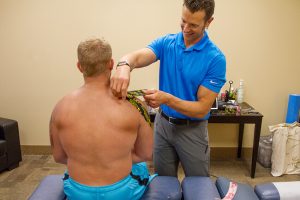
Race season is rapidly approaching. Whether it’s your first 5K or 5th marathon, right now is the time to think about what races to register for this year. How far apart will you space those races? How quickly will it take for you to recover from one race to the next? A lot of factors play in to the recovery process, with Kinesio Tape (also known as K-Tape) being one of them. This is not your traditional athletic tape that restricts movement and blood flow. Kinesio Tape is very pliable and allows much more range of motion.
You may see athletes wearing this highly visible, colored tape during races for specific musculoskeletal support and for post race recovery. This tape facilitates lymphatic drainage by microscopically lifting the skin, increasing interstitial space allowing better blood flow, a reduction of inflammation and better muscle mobility. Kinesio Taping can also aide in reducing muscle tightness. It helps relax soft tissues while stimulating nerve fibers to control pain.
K-tape is most commonly used during the acute stage of injury and can be used along with other modes of therapy. To bring about change in affected tissues and facilitate the body’s natural healing process, k-tape is used in different ways to achieve desired results. Applied in a partially stretched state, the direction of pull acts as a communication system on muscle receptors. The tape is applied from the muscle origin towards its insertion point to work in the direction of the muscle fibers. Contact with the skin provides stimulus for neuromuscular re-education by creating awareness of the muscle group. The athlete feels the tape on his/her skin during activity, causing the underlying muscles to respond and reminding the body what it’s supposed to do. If the muscle begins to overstretch, the tape provides a cue for the muscle to back off and avoid further injury. Most of my patients notice relief almost immediately!
Kinesio Tape is designed to stay on for approximately 3-4 days. The adhesive is heat- sensitive, so the tape is rubbed to make sure it is properly adhered to your skin. After a couple hours of normal activity, the Kinesio Tape should be properly bonded to the treated area. As a result of this strong bond, you can exercise and shower with the tape on without any issues. However, it is not recommended to swim with the Kinesio Tape on due to the chemicals in pool water that can potentially deteriorate the adhesive and loosen the tape.
Patellar tracking problems? Iliotibial band syndrome? These are just a few of the common issues I see in runners. While Kinesio Tape is not a quick fix, it can certainly help support and rehabilitate the area. Other common conditions that Kinesio-Tape can help include: carpal tunnel syndrome, neck and back pain, achilles tendonitis, strain/sprains, whiplash, lymphedema, plantar fasciitis, rotator cuff injuries, tennis elbow, golfer’s elbow, and postural abnormalities.
Again, this is just one component of accelerating recovery. Having raced 5Ks up to 50ks, I’ve had my fair share of nagging injuries.
Using a variety of different therapies, including Kinesio Taping, has allowed me to recover from my injuries faster and helped me get back on the trails more quickly.
Get on my schedule at Cooper Chiropractic for an assessment to see if Kinesio Taping can help you reach your race goals this year.
I look forward to meeting you!
-Dr. Kremer