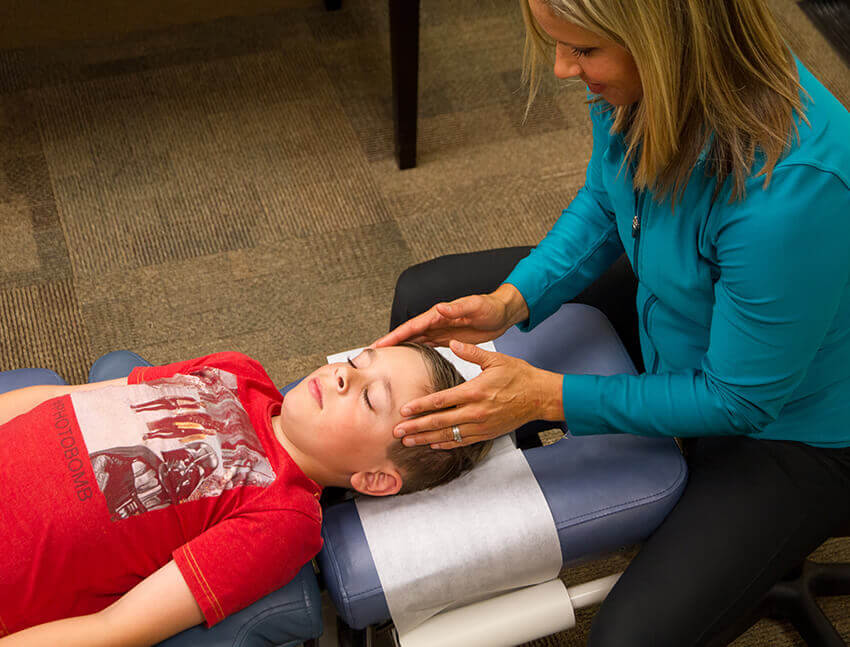
Craniosacral Therapy (CST) is a powerful tool in our clinical arsenal. Gentle and non-invasive, it works by addressing the craniosacral system — made up of the brain, spinal cord, sacrum, cerebrospinal fluid, and their surrounding membranes. Through extremely soft touch (no more than the weight of a nickel), CST releases restrictions and tensions held throughout the body, alleviating stress on the nervous system and restoring the body's innate capacity to heal.
The results often surprise patients who are skeptical going in. Conditions that have resisted other treatments — jaw pain, chronic headaches, colic in infants, neurological symptoms — frequently respond remarkably well.
For Infants — Cesarean and Natural Birth
Craniosacral Therapy is especially effective for newborns. Cesarean-born babies experience an abrupt change in cranial pressure that can disrupt the craniosacral rhythm and interfere with cranial nerve function. Naturally born babies undergo significant cranial compression during passage through the birth canal — compression that should resolve in the first weeks of life but sometimes does not, contributing to colic, feeding difficulties, and developmental concerns. CST addresses these issues gently and effectively.
Conditions CST Can Help
- ADD/ADHD · Anxiety · Autism spectrum
- Birth trauma (vacuum, forceps, prolonged or fast labor)
- Colic · Reflux · Difficulty latching or breastfeeding
- Developmental delays · Infant positional preferences
- Headaches and migraines
- Jaw pain and TMJ dysfunction
- Back pain during pregnancy
- Pelvic, vaginal, or groin pain
- Depression · Neurological conditions · Cerebral palsy
- Ear infections · Digestive and elimination difficulties